
Learn chess from the ground up: where the game came from, how to set up the board, how every piece moves, and how to build a practical plan from the opening to the endgame.
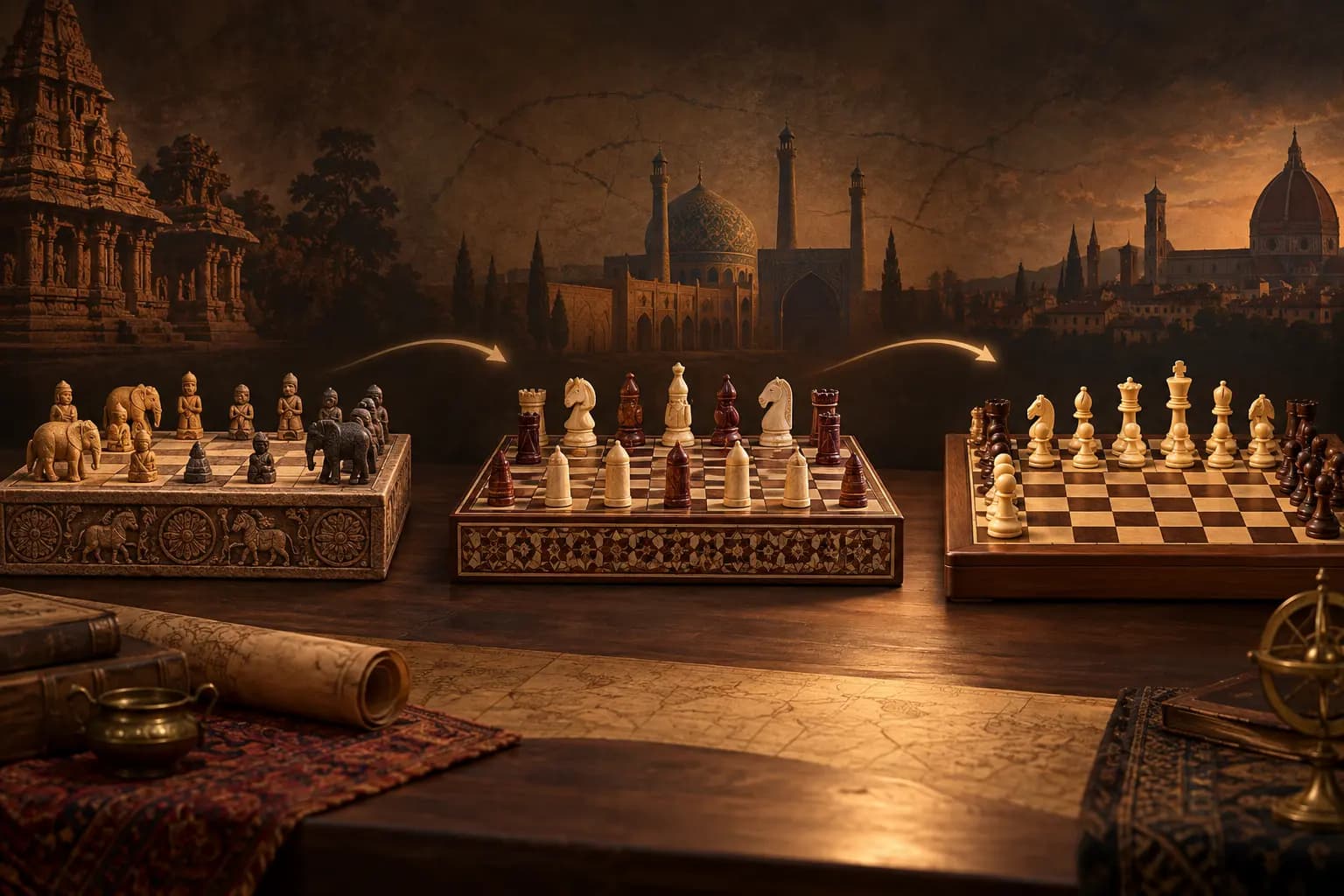
A short history of chess
Most histories connect chess to chaturanga, an early Indian war game that appeared around the sixth century. It travelled to Persia, where it became chatrang and later shatranj, then spread through the Islamic world and into Europe. European rule changes in the fifteenth century, especially the stronger queen and bishop, created the faster modern game. FIDE was founded in Paris in 1924 to help coordinate international chess and its rules.
How to set up the board
Use an 8×8 board with a light square in each player’s right-hand corner. From the outside in, the back rank is rook, knight, bishop, queen, king, bishop, knight, rook. Place eight pawns in front. White moves first.
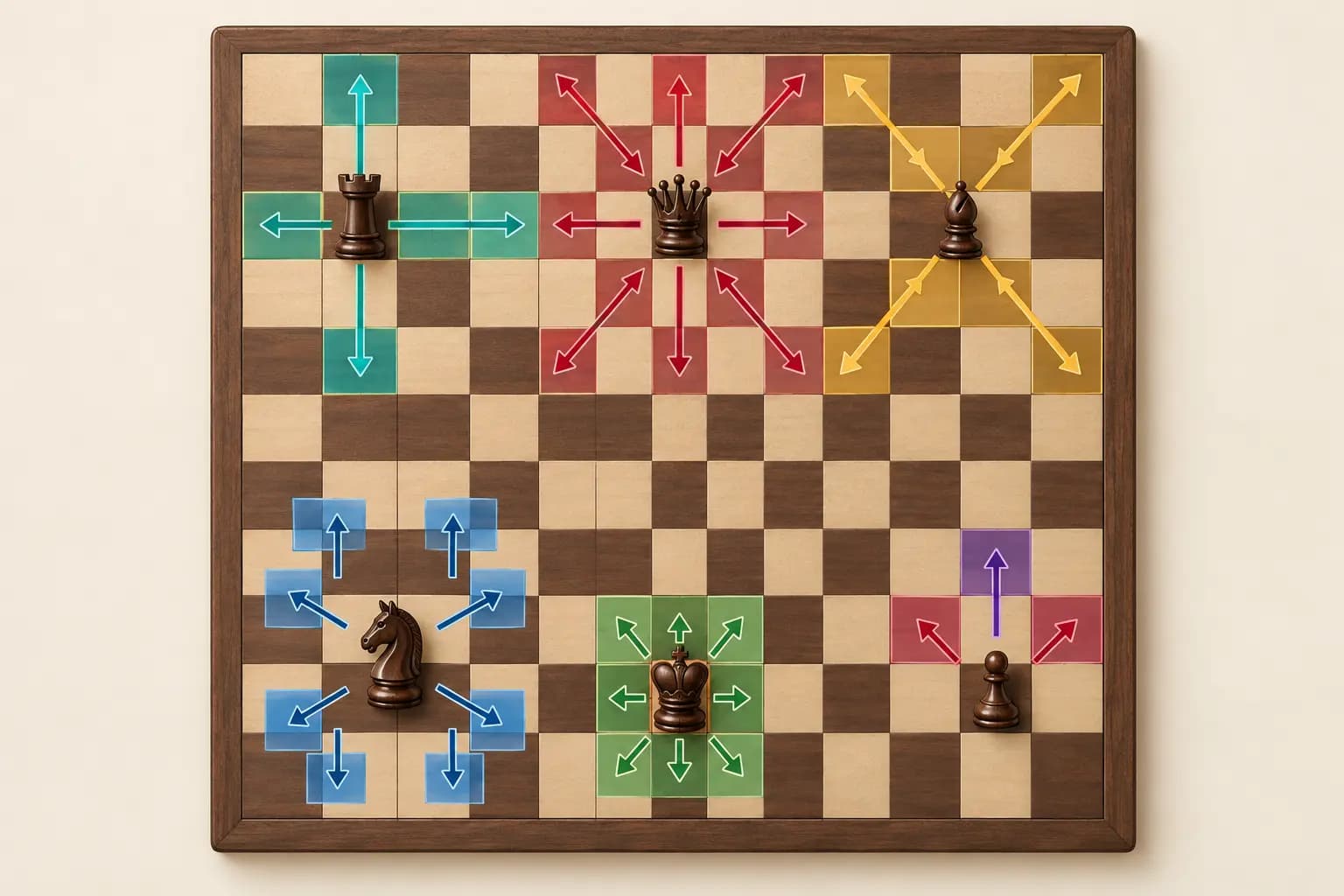
How every piece moves
| Piece | Movement | Key idea |
|---|---|---|
| King | One square in any direction. | Never move into check. |
| Queen | Any distance along ranks, files, or diagonals. | Powerful but vulnerable when developed too early. |
| Rook | Any distance along ranks or files. | Strong on open files. |
| Bishop | Any distance diagonally. | Stays on one square colour. |
| Knight | An L-shape: two squares one way and one perpendicular. | Can jump over pieces. |
| Pawn | Forward one, two from its start, captures diagonally. | Promotes on the last rank. |
Strategy that works
- Control the centre. Central squares give pieces more options.
- Develop quickly. Bring out knights and bishops, then connect the rooks.
- Keep the king safe. Castle when it is legal and useful.
- Look for forcing moves. Check, captures, and threats deserve attention first.
- Improve your worst piece. A good plan often begins with the least active piece.
- Activate the king in the endgame. Fewer pieces make king activity more important.
Sources
- [1] قوانین رسمی شطرنج فیده
مرجع قوانین حرکت مهرهها، قلعهرفتن، آنپاسان، ترفیع، کیش و مات و حالتهای مساوی.
- [2] تاریخچه شطرنج در موزه فیده
برای مسیر تاریخی شطرنج از شطرنج ایرانی و شطرنج اسلامی تا اروپا.
- [3] تاریخچه فیده و شکلگیری فدراسیون جهانی
برای تاریخ تأسیس فیده و استاندارد شدن مسابقات بینالمللی.
- [4] World Chess Hall of Fame — Chess Masterpieces
مروری موزهای بر ریشهها و تحول فرهنگی شطرنج.